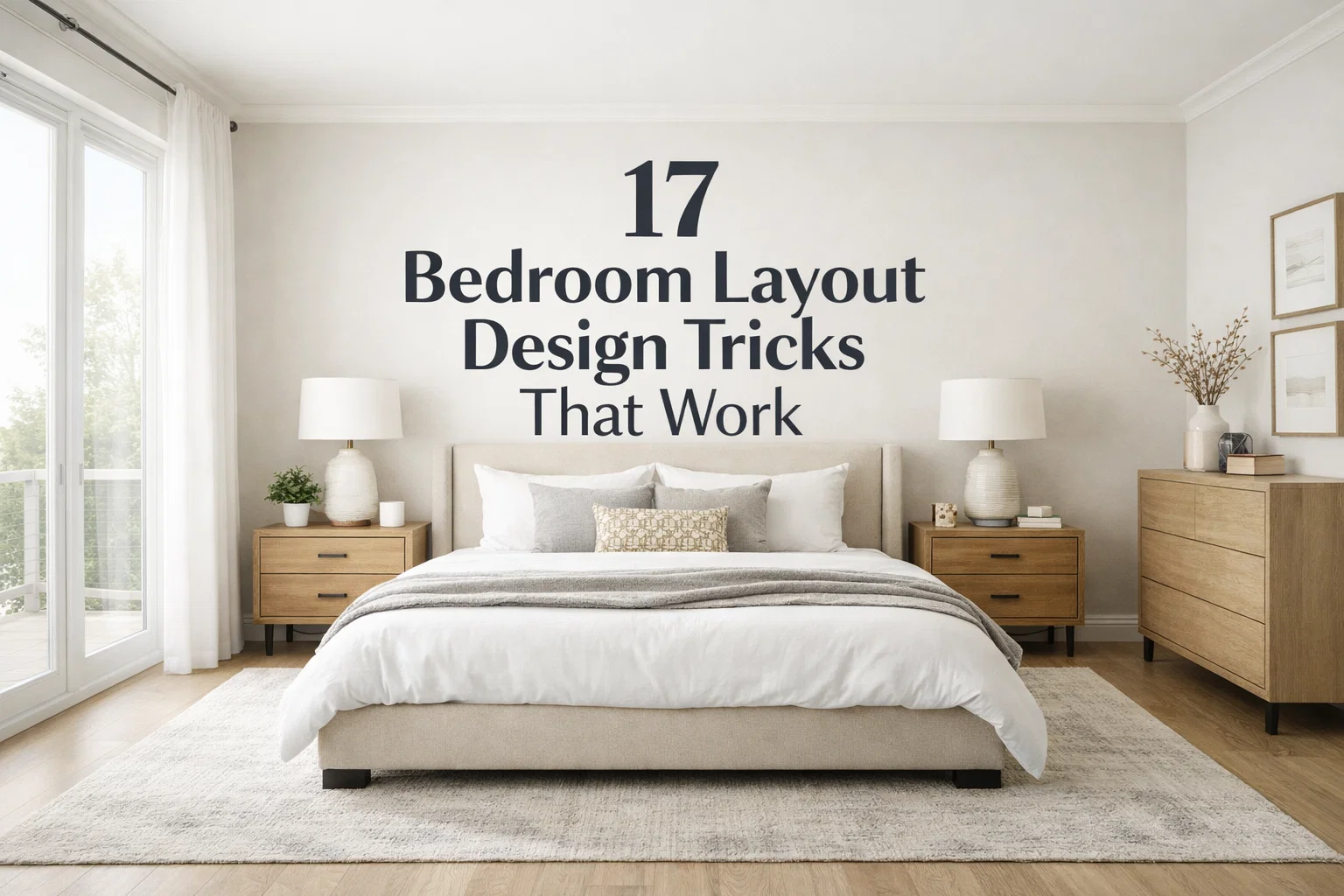
A well planned bedroom layout can completely change how a space feels and functions. Even with beautiful decor, a poorly arranged room can feel cramped, awkward, or uncomfortable. Layout design is the foundation that determines flow, balance, and how easily you move and relax in your bedroom.
Bedroom layout is not about following strict rules but about understanding proportions, furniture placement, and personal habits. The right arrangement can make a small bedroom feel spacious or turn a large room into a cozy retreat. Thoughtful layout choices also improve storage, lighting, and overall comfort.


The following 17 bedroom layout design tricks focus on practical solutions that actually work in real homes. Whether your bedroom is large or small, these ideas will help you create a space that feels balanced, functional, and visually pleasing.
1. Place the Bed as the Focal Point
The bed should always be the visual anchor of the bedroom. Positioning it against the main wall helps create balance and gives the room a clear center. This instantly makes the layout feel intentional and organized rather than random.
When the bed is well placed, the rest of the furniture naturally falls into place. Keeping the bed visible upon entry also creates a welcoming and comfortable atmosphere that defines the room’s purpose.
2. Center the Bed on the Wall
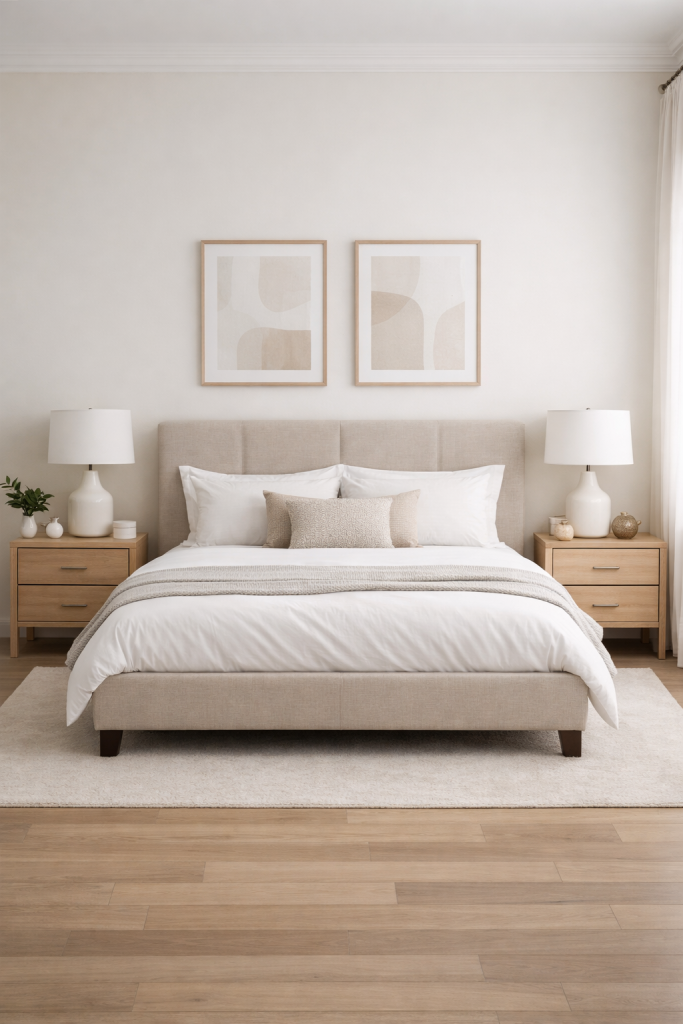
Centering the bed on the main wall creates symmetry and visual harmony. This layout works especially well in rectangular rooms where balance is important for a calm feel.
Once centered, you can easily add matching nightstands or lighting on both sides. This creates a polished look and improves functionality while maintaining a sense of order.

3. Leave Space on Both Sides of the Bed
Allowing space on both sides of the bed improves accessibility and comfort. It makes the room feel more open and prevents a cramped appearance, especially in shared bedrooms.
This spacing also allows room for nightstands or wall mounted lighting. Proper clearance enhances movement and makes everyday use more comfortable.

4. Avoid Blocking Windows
Natural light is essential for a pleasant bedroom layout. Avoid placing large furniture like beds or wardrobes in front of windows, as this blocks light and airflow.
Keeping windows clear makes the room feel brighter and more spacious. It also enhances ventilation and creates a more refreshing environment.

5. Use the Wall Opposite the Bed Wisely
The wall opposite the bed is prime layout space. It works well for dressers, wardrobes, or a TV unit without cluttering the room.
Using this wall strategically maintains visual balance. It also ensures that storage and functionality do not interrupt the flow around the bed.

6. Choose the Right Bed Size
Selecting the correct bed size is crucial for layout success. A bed that is too large can overwhelm the room, while one that is too small may look out of place.
Measure the room carefully before choosing a bed. The right proportions help maintain balance and allow space for other essential furniture.

7. Float Furniture When Possible
Floating furniture slightly away from walls can make a bedroom feel more spacious. This technique works especially well in larger rooms.
Leaving small gaps improves visual flow and prevents the room from feeling boxed in. It also adds a more intentional and modern layout feel.

8. Use Corners for Storage
Corners are often underused in bedroom layouts. Placing wardrobes, shelves, or reading chairs in corners maximizes space without cluttering main walkways.
Corner storage keeps the center of the room open. This layout trick is especially helpful in smaller bedrooms where every inch matters.

9. Keep Walkways Clear
Clear walkways are essential for a functional bedroom layout. Avoid placing furniture where it interrupts natural movement paths.
A clear flow makes the room feel calmer and easier to navigate. It also improves safety and daily comfort.

10. Balance Furniture Heights
Mixing furniture of different heights creates visual balance. Tall wardrobes paired with lower beds and nightstands prevent the room from feeling top heavy.
Balanced heights add depth and interest to the layout. This creates a more dynamic yet harmonious bedroom design.

11. Use Rugs to Define Zones
Rugs help visually organize the bedroom layout. Placing a rug under the bed or seating area defines zones and adds structure.
Rugs also improve comfort and warmth. They help anchor furniture and make the layout feel complete and cohesive.

12. Align Furniture with Architecture
Aligning furniture with architectural features such as windows, doors, or beams improves layout harmony. This makes the room feel naturally balanced.
Respecting the room’s structure prevents awkward placements. It also enhances flow and visual clarity.

13. Opt for Wall Mounted Lighting
Wall mounted lights free up surface space and improve layout efficiency. This is especially useful in small bedrooms.
By removing bulky lamps, the room feels less cluttered. Wall lighting also adds a clean and modern touch to the layout.

14. Create a Functional Seating Area
If space allows, adding a small seating area improves layout functionality. A chair or bench adds comfort without disrupting flow.
Place seating near windows or at the foot of the bed. This creates balance and adds a practical zone to the bedroom.

15. Use Mirrors to Expand Space
Mirrors reflect light and visually expand the room. Placing mirrors strategically improves layout perception.
Mirrors opposite windows or near light sources enhance brightness. This makes the bedroom feel more open and airy.

16. Avoid Overcrowding Furniture
Too much furniture disrupts layout balance. Keep only essential pieces to maintain openness and comfort.
Minimal furniture improves flow and highlights key design elements. A less crowded layout feels calmer and more functional.

17. Let the Room Breathe
Negative space is just as important as furniture placement. Leaving empty areas allows the layout to feel relaxed and intentional.
A breathable layout reduces visual stress. It creates a peaceful environment that supports rest and comfort.

FAQs
What is the best bedroom layout for small rooms?
The best layout keeps the bed centered, uses vertical storage, and maintains clear walkways. Avoid oversized furniture to prevent crowding.
How much space should be left around the bed?
Ideally, leave at least 24 to 30 inches on each side for comfortable movement and balance.
Should the bed face the door?
Yes, if possible. Facing the door creates a sense of security and balance without being directly aligned with it.
How do I fix an awkward bedroom layout?
Focus on decluttering, rearranging furniture, and aligning pieces with architectural features to improve flow.
Final Remarks
A successful bedroom layout is the key to creating a space that feels calm, comfortable, and functional. By focusing on balance, movement, and intentional placement, you can dramatically improve how your bedroom looks and feels.
These 17 bedroom layout design tricks are practical solutions that work in real homes. Start with small adjustments and build a layout that supports rest, relaxation, and everyday living.
Leave a Reply